
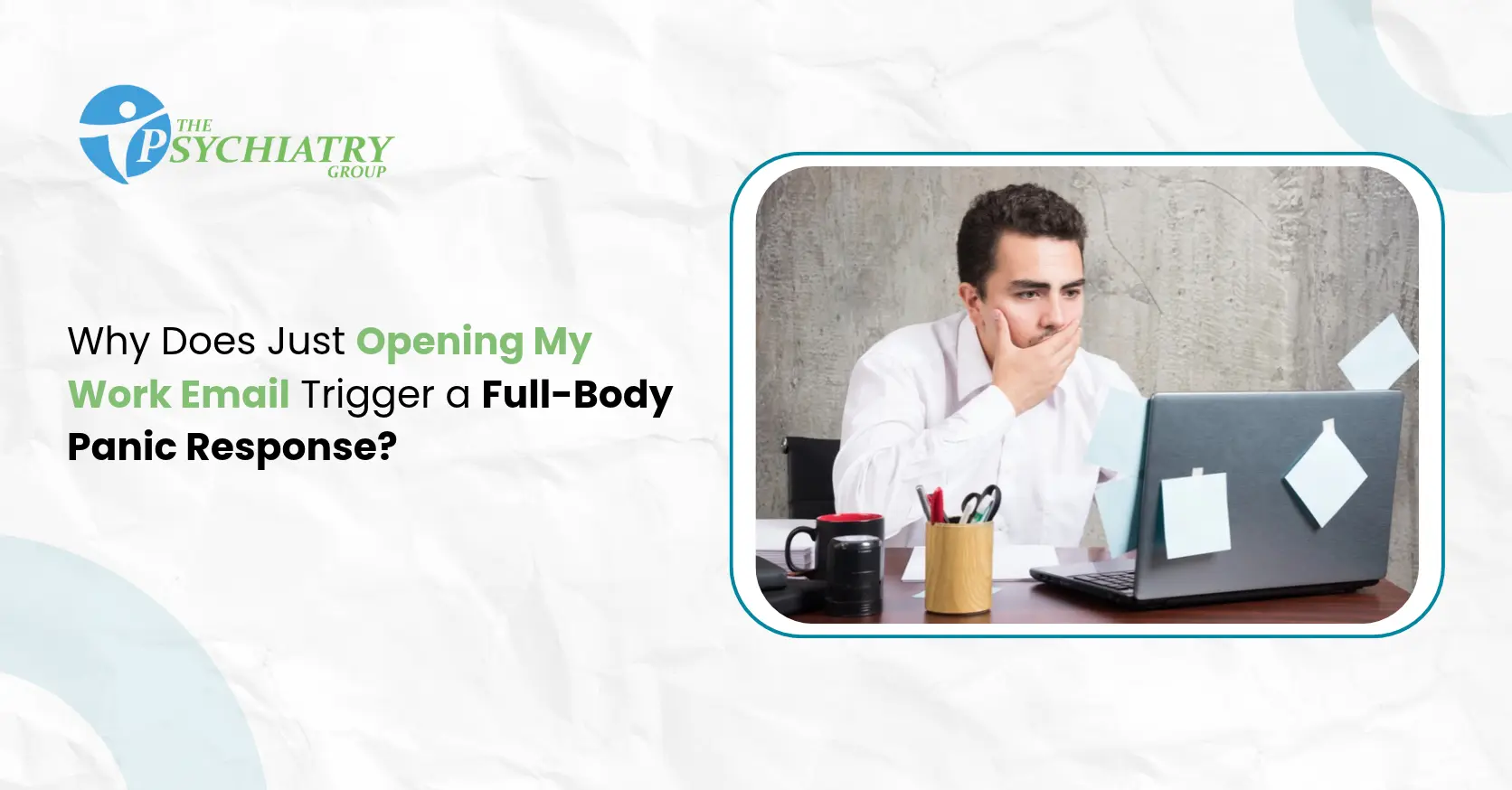
Opening a work email should feel like a normal part of the day. But for some people, even seeing their inbox can cause intense fear. Their heart starts racing, their stomach feels tight, and their hands may shake. Some people feel sick before they even read a single message.
Your brain can learn to see work email as a danger. After stressful or harsh messages, your body may sound an alarm when you open your inbox. This is a learned response. It is common, and it can change with the right support and care.
At The Psychiatry Group, we provide psychiatric services designed to support eligible injured workers and individuals dealing with mental health concerns related to workplace injuries.
Why Your Brain Treats an Inbox Like a Threat
Your brain has an alarm system. A part of your brain called the amygdala is responsible for finding danger. It was made to find physical threats. Today, it can react to things like a red badge or a boss’s name on a computer screen.
If an email brings you bad news or harsh words, your brain can store this as a negative memory. A ping on your computer or opening your laptop could trigger the same emotional reaction as reading the email, even before you have read any of the words. This is a learned response and can be altered with support.
The National Institute of Mental Health (NIMH) says long-term stress can keep the body on high alert. Then normal tasks can feel like emergencies.
Body Signs of Email Panic
This is not just in your head. It can hit your whole body at once. You may notice:
- A pounding or fast heart rate
- Shortness of breath or a tight throat
- Sweaty palms, chills, or sudden hot flashes
- A knotted stomach or feeling sick
- Shaky hands and tense shoulders
- Dizziness or a strong urge to close your laptop
Common Work Triggers
Not every email causes panic. Certain patterns at work can teach your body to stay on alert.
| Trigger | What It Looks Like | Why It Causes Panic |
| Unclear Tone | Short notes like “See me” or “Fix this” | Your brain fills in the blanks with the worst case. |
| Unpredictable Demands | Last-minute tasks marked “URGENT” | You feel a loss of control over your time. |
| After-Hours Messages | Emails at 9:00 PM or on Sundays | Emails at 9:00 PM or on Sundays |
| Past Trauma or Burnout | Past blame or yelling over email | Opening the app brings back shame or fear. |
When Work Stress Becomes a Workplace Injury
Most days, email dread is burnout. But severe stress or trauma at work can become a medical issue. In Washington, the Department of Labor & Industries (L&I) handles workers’ compensation claims.
Under RCW 51.08.142, everyday job stress is usually not covered. A heavy workload or a tough boss does not usually count. L&I may cover psychiatric care in two main cases:
- After a physical injury. If you hurt your back or head at work and later develop severe anxiety or depression, L&I may cover treatment.
- After one scary event. If you see or survive an assault or life-threatening event at work, you may qualify for post-traumatic stress care. First responders have extra protections.
To approve care, an L&I-credentialed psychiatrist must give a clear evaluation. It should show how the injury or trauma caused or worsened your symptoms.
The Psychiatry Group offers care for eligible Washington cases, including state L&I and self-insured employer claims.
5 Simple Steps to Calm Your Body Before You Check Email
You cannot control who emails you. But you can train your body to stay calm. Try these steps each morning.
- Wait 30 minutes after you wake up. Have water, light, and movement first.
- Take three slow belly breaths. Breathe in for four seconds. Hold for four. Breathe out for six. A long exhale helps your heart slow down.
- Drop your shoulders and unclench your jaw. A relaxed body tells your brain you are safe.
- Set fixed email times. Try 9:00 AM, 1:00 PM, and 4:00 PM. Close the tab in between.
- Turn off pop-up banners and sounds. Alerts keep your nervous system on edge.
When to Reach Out to a Psychiatrist
If you experience chest tightness, dizziness, or anxiety about going to bed due to concerns about early morning emails, contact a physician. Chronic panic can negatively impact your ability to sleep, concentrate, and overall health.
Our Board-Certified Psychiatrists help injured workers throughout Washington State. Some of our L&I Services are:
- Initial psychiatric diagnostic assessments
- Follow-up care and medication management
- Evaluations for reopening an L&I claim
- Psychiatric impairment rating exams
The right care can help you feel safe again, whether you need a treatment plan, medication care, or a return-to-work review.
When to Get Help Fast
Contact someone for assistance as soon as possible if you experience chest pain that cannot be explained or have thoughts of self-harm. You can contact 911 or contact/text 988.
FAQs
Is panic at work email normal?
Many people feel stress about work email. However, when the panic you feel is constant and you can’t get rid of it, that’s something you should be concerned about.
Why does my stomach feel sick when I look at my work laptop?
Stress affects how fast you digest food. This connection is through a nerve called the vagus nerve. If you experience stress, your body may process food more slowly, causing you to have an upset stomach, nausea or even cramps.
Should I tell my doctor about work panic?
Yes. Share symptoms like chest tightness, poor sleep, and daily dread.
Get Support for Work-Related Stress
You do not have to live with a racing heart every time you sit at your desk.
At Psychiatry Group, we use a team of skilled mental health professionals who can perform comprehensive psychiatric assessments, make definitive diagnoses and create individual treatment plans for patients with multiple and severe mental health issues.
Whether you need to manage extreme levels of anxiety or require an impartial psychiatric evaluation for a job-related claim, we are here to help.
Contact us today to schedule a consultation.
Sources
- National Institute of Mental Health (NIMH): Anxiety Disorders Overview
- Centers for Disease Control and Prevention (CDC) / NIOSH: Stress at Work
- Washington State Department of Labor & Industries (L&I): Mental Health Services
- Washington State L&I: Mental Health Specialists Authorization and Reporting Requirements (RCW 51.08.142)
Medical Disclaimer: This article is for educational and informational purposes only and does not constitute medical advice, diagnosis, or treatment. Always consult a qualified healthcare provider regarding any medical or mental health condition.
No comment